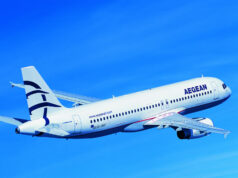

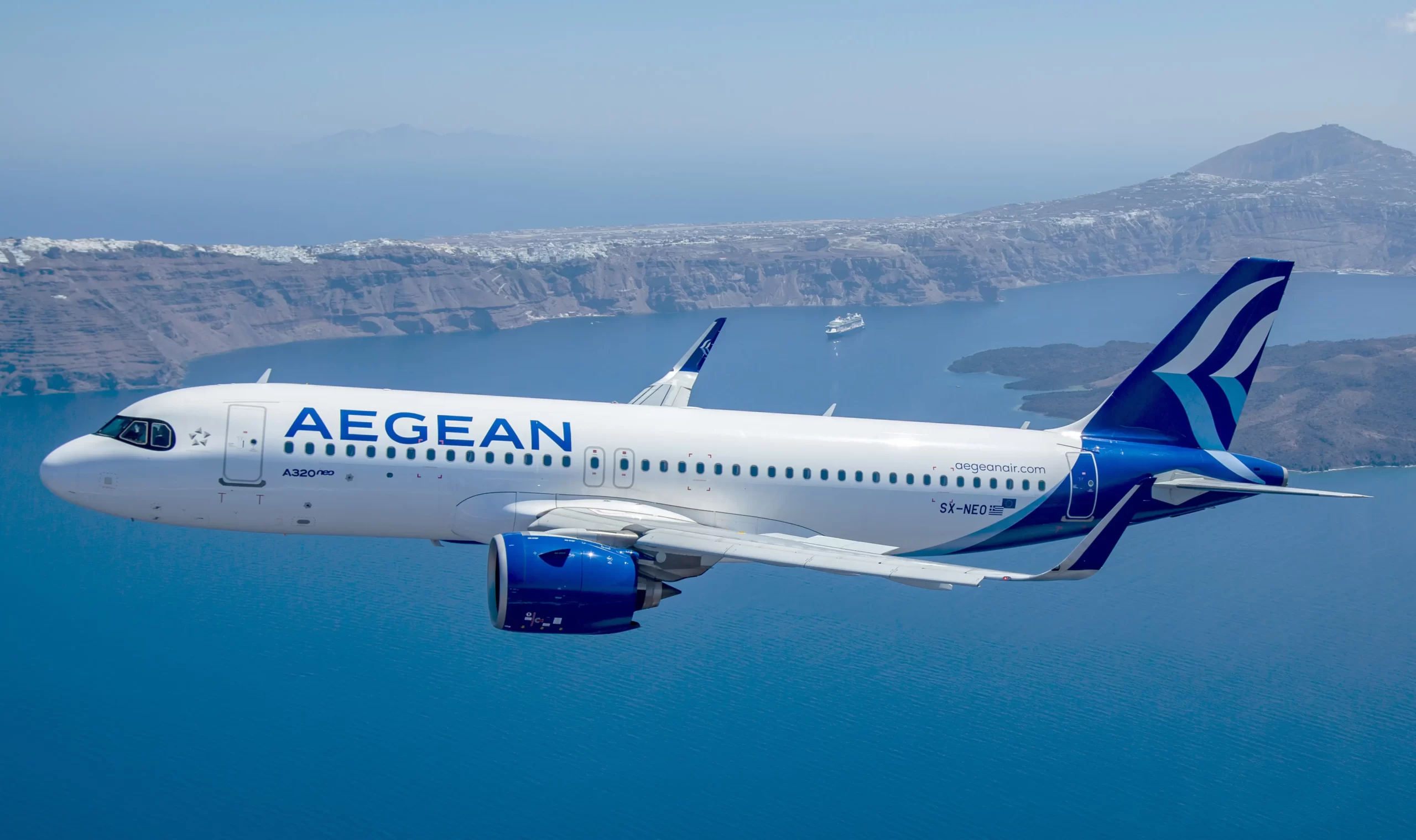
Aegean Airlines S.A. is the flag carrier of Greece and the largest Greek airline by passengers carried, destinations served, and fleet size. Headquartered in Kifisia, a suburb of Athens, it operates as a full-service regional carrier with scheduled passenger, charter, and cargo services, emphasizing connectivity across Europe, the Middle East, and North Africa. As a Star Alliance member since 2010, it integrates with global partners for seamless travel. The airline focuses on premium service, sustainability (fleet renewal for lower emissions), and passenger experience enhancements via Oracle Fusion Cloud CX for personalized offerings. It maintains separate brands for subsidiary Olympic Air (domestic focus) and Aegean Executive (VIP charters). Aegean holds a 14th Skytrax World Airline Award as Europe’s Best Regional Airline (13th consecutive year as of 2025). It offers the Miles+Bonus loyalty program and supports Greek tourism through extensive seasonal charters.Key operational details include:
- Fleet: As of August 2025, 67 mainline aircraft: 27 Airbus A320-200s (180 seats), 21 Airbus A320neos (186 seats, fuel-efficient), 4 Airbus A321-200s (220 seats), and 15 Airbus A321neos (220 seats). Subsidiaries add ~16 aircraft (12 ATR 72-600s for Olympic Air regional routes, 2 Bombardier Q400s, and 2 VIP jets: Learjet 60 and Gulfstream G650). Orders: 24 more A320neo-family (18 A321neo, 4 A321LR with lie-flat seats for non-EU routes, 2 A321XLR for long-haul to India; deliveries 2025–2028). Total group fleet: ~83 aircraft, one of Europe’s youngest averages. Six additions planned for 2025 (3 A320/A321neo delivered, 3 more expected).
- Network: Serves 162 destinations in 47 countries via 250 routes (55 domestic, 195 international; ~300 weekly flights). Main hubs: Athens International (ATH), Thessaloniki Macedonia (SKG), Larnaca (LCA, Cyprus). Seasonal bases in Heraklion (HER), Rhodes (RHO), Corfu (CFU), Chania (CHQ), Mykonos (JMK), Santorini (JTR), and Preveza (PVK). Key expansions for 2025: New routes to Erbil (Iraq), Baku (Azerbaijan), Istanbul (from HER, JMK, RHO, JTR), Rome (from LCA), and domestic links (e.g., HER to RHO, Naxos, CFU, Kos; RHO to CHQ, JTR; SKG to Syros). Codeshares with IndiGo (India), Cyprus Airways, Discover Airlines; interlines with Trenitalia. Offers ~21.5 million seats in 2025 (+9% YoY).
- Codes and Allowances: IATA code A3; ICAO code AEE. Baggage: Economy 1x23kg checked + 8kg carry-on (EU/short-haul), 2x23kg (long-haul); Business 2x32kg + 10kg carry-on. Online check-in 48 hours–30 minutes prior.
- Workforce and Performance: Employs ~2,500 staff. Carried 16.3 million passengers in 2024 (+6% YoY); 1.9 million in Jan–Feb 2025 (+9%). H1 2025 revenue up 4% to ~€700M (est.), net profit +109% to €100M+, EBITDA + strong growth; cash equivalents €842M (June 2025). Q2 2025 load factor ~85%. Plans 21.2–21.5 million seats for 2025, focusing on international growth (60% of traffic).
Aegean positions itself as Europe’s top regional airline, driving Greek tourism and economic connectivity with a young, efficient fleet and strategic expansions.
| Field | Details |
|---|---|
| Full Name | Aegean Airlines S.A. |
| Founded | 1987 (as Aegean Aviation); commercial operations began in 1999 |
| Headquarters | Athens, Greece |
| Main Hub | Athens International Airport (ATH) |
| Secondary Hubs | Thessaloniki, Heraklion, Larnaca |
| Ownership | Privately owned; publicly traded on the Athens Stock Exchange |
| Alliance | Member of Star Alliance (joined in 2010) |
| Fleet Size | Approximately 68 aircraft (Airbus A320, A321, A320neo, A321neo, plus ATR turboprops via Olympic Air) |
| Destinations | Over 160 destinations in Europe, the Middle East, and North Africa |
| Passenger Traffic | Around 15.7 million passengers (2023) |
| Subsidiary | Olympic Air (acquired in 2013) |
| Frequent Flyer Program | Miles+Bonus |
| Service Type | Full-service airline (economy, business class, lounges, meals, etc.) |
Brief History
Aegean Airlines was founded on January 2, 1995, evolving from Aegean Aviation’s VIP jet operations, and launched commercial scheduled flights on May 28, 1999, with Avro RJ100s on Athens–Heraklion and Athens–Thessaloniki routes. It acquired Air Greece in December 1999, expanding domestically. The 2000s saw fleet growth: Phased out turboprops by 2004, ordered eight A320s (2005), and added Boeing 737-300/400s (retired 2010). Partnerships formed with Lufthansa (2005), TAP Portugal (2006), and Brussels Airlines (2008); codeshares expanded in 2009.
In 2010, Aegean joined Star Alliance and announced a merger with Olympic Air (blocked by EU in 2011 over monopoly fears). A revised acquisition of Olympic Air was approved in October 2013, completed February 2014, integrating routes while retaining brands. The 2010s focused on modernization: First FANS-B+ upgrades (2010), cabin retrofits (2014), seven new A320ceos (delivered 2016), and a major 30-aircraft A320neo-family order (2018; first A320neo 2019, A321neo 2020). Network grew to Europe/Middle East, with Cyprus hub post-Cyprus Airways bankruptcy (2012).
The 2020s emphasized resilience and expansion: Acquired 51% of Animawings (2020, sold 2024). COVID-19 recovery drove record 16.3 million passengers (2024). In 2024, extended neo order to 50 aircraft, adding A321LR/XLR for long-haul (e.g., India from late 2025). 2025 milestones: Six fleet additions, 21.5 million seats offered (+9%), new routes to Iraq/Azerbaijan/Turkey, IndiGo codeshare, and H1 profit surge (+109%). Aegean continues as Greece’s aviation leader, with ownership led by Theodoros Vassilakis (~34%).
| Year | Event / Milestone |
|---|---|
| 1987 | Founded as Aegean Aviation, initially offering VIP and charter flights |
| 1999 | Launched scheduled passenger flights as Aegean Airlines; acquired Air Greece |
| 2001 | Merged operations with Cronus Airlines |
| 2005 | Formed a partnership with Lufthansa, beginning codeshare operations |
| 2010 | Officially joined Star Alliance, expanding international cooperation |
| 2013 | Acquired Olympic Air, expanding its domestic Greek network |
| 2018 | Announced large fleet renewal with Airbus A320neo and A321neo aircraft |
| 2020–2022 | Faced challenges due to COVID-19 but rebounded with strong domestic demand |
| 2023 | Reached nearly 16 million passengers; expanded international routes and modernized fleet further |