
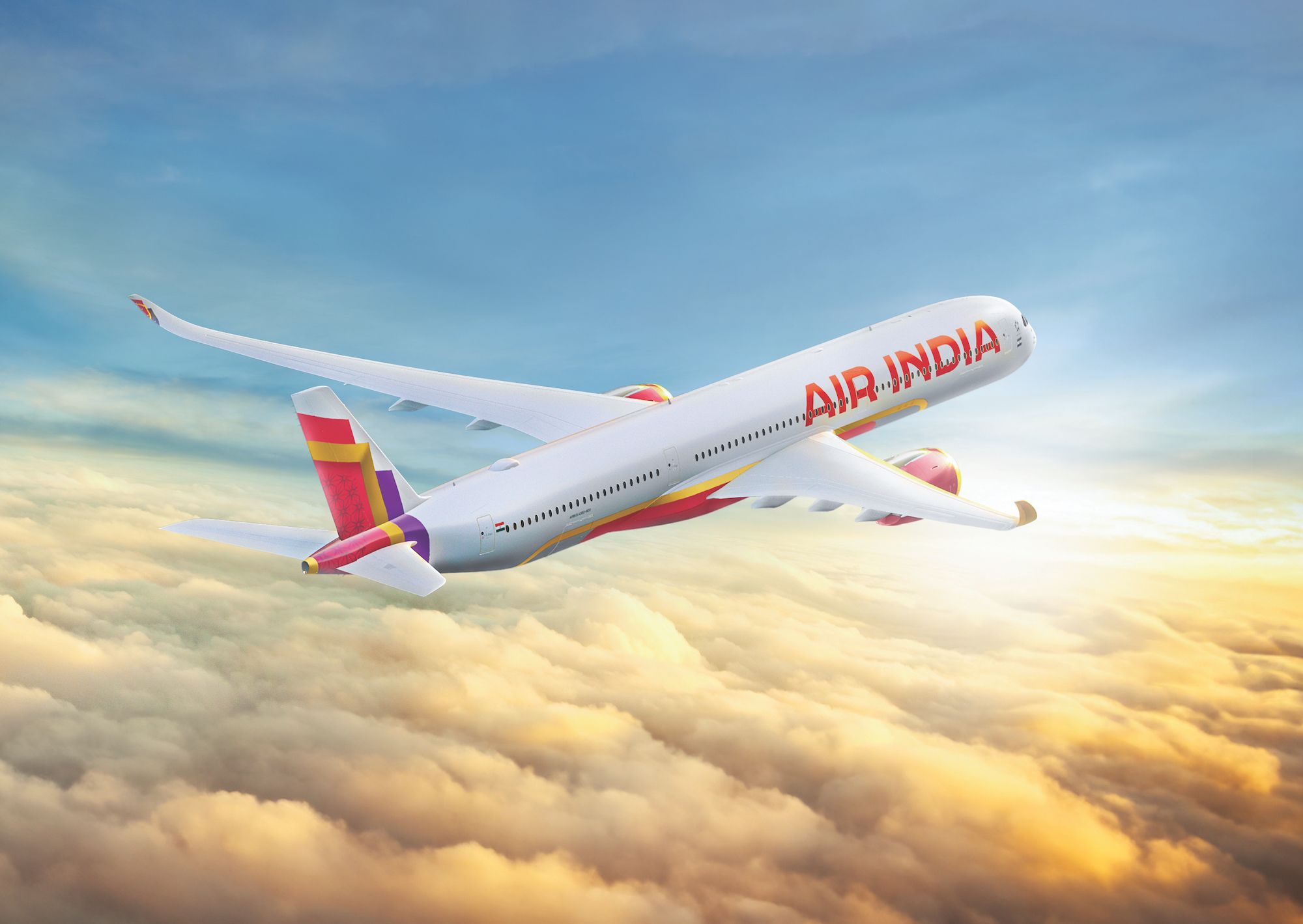
Air India is the flag carrier of India, operating as a full-service airline with scheduled passenger, cargo, and charter flights. Headquartered in New Delhi at the Indira Gandhi International Airport (DEL), it is wholly owned by the Tata Group since its privatization in 2022. As a Star Alliance member since 2014, Air India connects India to global destinations across Asia, Australia, Europe, the Middle East, North America, and beyond, serving as a key enabler of India’s economic and tourism growth. The airline emphasizes premium hospitality through its Maharaja Club loyalty program (with tiers for miles redemption and lounge access) and initiatives like free onboard Wi-Fi on select aircraft (rolled out January 1, 2025, on A350s, Boeing 787-9s, and some A321neos). Under the Vihaan.AI transformation plan, it focuses on fleet modernization, network expansion, and sustainability, targeting carbon neutrality by 2050 via efficient aircraft and sustainable aviation fuel (SAF) trials. Subsidiaries include Air India Express (low-cost domestic/international) and a planned dedicated cargo entity aiming for 2.5 million tonnes annually by 2027. Recent enhancements include refurbished cabins, Apple AirTag baggage tracking, and codeshares with partners like Singapore Airlines and Air Astana.Key operational details include:
- Fleet: As of September 2025, 191 aircraft, comprising narrow-body Airbus models (A319, A320, A320neo, A321, A321neo; ~129 total) and wide-body aircraft (6 Airbus A350-900s, 27 Boeing 777-200/300ERs, 33 Boeing 787-8/9s). The average fleet age is ~8.1 years. Ongoing $400 million retrofit program (launched September 2024) targets 67 legacy aircraft, with narrow-body upgrades complete by September 2025 (new cabins on key domestic/short-haul routes) and Boeing 787-8s starting in December 2025 (full 787 fleet by mid-2027; 777s delayed to 2027–2028). Orders: Historic 470 aircraft (250 Airbus, 220 Boeing; deliveries 2025–2032) plus 100 more Airbus (December 2024), totaling ~570 for expansion to 500+ by 2030.
- Network: Serves 102 destinations in 31 countries across five continents via ~300 routes (60% domestic, 40% international), with ~1,500 weekly flights. Main hub: Indira Gandhi International Airport (DEL), Delhi; secondary hubs: Chhatrapati Shivaji Maharaj International Airport (BOM), Mumbai; Kempegowda International Airport (BLR), Bengaluru. Top international routes (by weekly seats, 2025): Delhi–London Heathrow (daily A350/787), Delhi–New York JFK (daily 777), Mumbai–New York JFK (daily 777), Delhi–Dubai (multiple daily A320), Delhi–Toronto (daily 787). Expansions for 2025: New routes to Manila and Jakarta (early 2025); increased frequencies to UK/Europe/Asia; shifts to Tokyo Haneda (March 31, 2025) and Kuala Lumpur Terminal 1 (September 15, 2025). Temporary suspensions due to retrofits: Mumbai–Melbourne (March 30–September 13, 2025), Kochi–London Gatwick (from March 30, 2025). Focus cities include Ahmedabad, Goa, and Amritsar for diaspora/business traffic.
- Codes and Allowances: IATA code AI; ICAO code AIC. Baggage: Economy 1x23kg checked + 7kg carry-on (domestic/short-haul), 2x23kg checked (long-haul); Business/First 2x32kg + 10kg carry-on. Varies by route/class; Apple AirTag support for tracking.
- Workforce and Performance: Employs 30,000 staff (group-wide, including subsidiaries). Carried ~45.8 million passengers in FY2024 (domestic focus); FY2025 revenue ₹61,080 crore (US$7.2B), net loss ₹3,976 crore (~US$−470M) amid transformation costs. Load factor ~80%; strong recovery with 20% international growth forecast for 2025.
Air India positions itself as India’s global connector, blending heritage with modern innovation to reclaim market leadership.
| Field | Details |
|---|---|
| Name | Air India Limited |
| Type / Ownership | Full‑service flag carrier of India; majority owned by Tata Group, with Singapore Airlines holding a minority stake |
| Headquarters | Mumbai, Maharashtra, India (with a major administrative presence in Gurgaon) |
| Founded | October 1932 (as Tata Airlines) |
| Current Form / Reorganization | Reorganized over decades; merged with Indian Airlines; privatized in 2021 under the Tata Group; subsequent consolidation of subsidiaries like Vistara and Air India Express |
| Primary Hubs / Focus Cities | New Delhi (Indira Gandhi International), Mumbai, other Indian metros and international gateway cities |
| Fleet Size & Composition | Over 120‑130 aircraft; mix of wide‑body (for long haul international routes) and narrow‑body (for regional/domestic routes) from Boeing and Airbus families; includes modern aircraft like the A320neo family, Boeing 777, Boeing 787, etc. |
| Destinations / Network | Extensive network: domestic India; international destinations across Asia, Europe, North America, the Middle East, Australia; nonstop long-haul services including to USA, UK, Canada, Australia |
| Frequent Flyer Program | “Flying Returns” (or its current loyalty branding) |
| Alliance | Member of the Star Alliance |
| Employees | Tens of thousands (approx. 18,000 across the group) |
Brief History
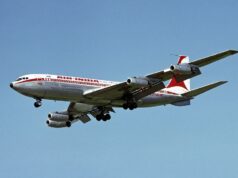
Air India was founded on October 15, 1932, as Tata Airlines by J.R.D. Tata, starting with mail/passenger services using a de Havilland Puss Moth between Karachi and Bombay (Mumbai). It became a public company named Air India in 1946, pioneering Asian aviation with routes to Europe and Asia. Nationalized in 1953 under the Air Corporations Act, it focused on international services while domestic operations went to Indian Airlines; renamed Air India International, it introduced the Boeing 707 in 1960, becoming the world’s first all-jet airline by 1962. Expansion included Boeing 747s (1971) for “Palace in the Sky” luxury and routes to New York (direct Delhi–NYC, 1961) and around-the-world flights.
The 1970s–1990s saw growth with Airbus A310s (1986) and global reach, but competition post-1994 liberalization eroded market share. Merged with Indian Airlines in 2007 as Air India Limited, it faced mounting losses (₹70B+ by 2010) due to overstaffing and fuel costs. Privatization bids failed in 2000–2001 and 2018, but in October 2021, Tata Group reacquired it for ₹18,000 crore, completing handover in January 2022 with CEO Campbell Wilson appointed in May.
The 2020s mark revival: Launched Vihaan.AI in 2022 for turnaround; ordered 470 aircraft (US$70B, February 2023) from Airbus/Boeing. Merged AIX Connect (ex-AirAsia India) with Air India Express (October 2024) and Vistara (November 2024, adding ~50 aircraft/routes). Refurbishments began September 2024 ($400M for 67 planes); first A350s entered service January 2024. Challenges included a May 2021 data breach (4.5M customers affected) and June 12, 2025, Flight 171 crash (Boeing 787-8 from Ahmedabad to London Gatwick; 241 killed, one survivor). By September 2025, with 191 aircraft and network to 102 destinations, Air India advances toward profitability, fleet renewal, and Star Alliance synergies.
| Period / Year | Event / Milestone |
|---|---|
| 1932 | Founded by J.R.D. Tata as Tata Airlines; carried mail and some passengers on early routes within British India |
| 1946 | Post‑World War II, converted into a public company; renamed Air India; began expanding both domestic and international services |
| 1948‑1953 | Over time, government acquired increasing ownership; by 1953, under government control; split of domestic vs international operations brought under different corporations; name “Air India” officially used for international operations |
| 1960s–70s | Growth of international network; introduction of jet aircraft; acquisition of large long‑haul aircraft (e.g. Boeing 707, Boeing 747); cultural brand “Maharaja” becomes iconic; luxury flagship services like “The Palace in the Sky” on 747s |
| 1990s‑2000s | Increasing competition from private carriers; struggles with profitability; gradual modernization; government attempts at reform; mixed financial performance |
| 2007‑2010 | Merged with Indian Airlines (which handled domestic operations) to unify full service carrier; renamed to Air India Limited; efforts to streamline operations |
| 2010s | Continued competition; more route additions overseas; added newer aircraft; service improvements but carried legacy challenges (high debt, aging fleet, operational inefficiencies) |
| 2021‑2022 | Major turning point: privatization completed, with Tata Group acquiring the carrier; rebranding and transformation plan launched; modernization of fleet and livery; new orders for aircraft placed; merger of subsidiaries (Vistara, Air India Express) underway |
| 2023 onwards | Aggressive expansion and renewal: large orders for new aircraft; investment in aircraft interior refurbishments; efforts to improve punctuality, customer service and global network; ambitious growth plan under transformation roadmap (Vihaan.AI) to restore Air India’s global standing |