
Passengers flying between India and the West are facing longer travel times, soaring fares and fewer options as airlines reroute flights to avoid conflict-hit airspace in West Asia.
Pilots on some long-haul flights have even begun pointing out an unusual sight to travellers. “Passengers seated to the (right or left) can see the pyramids of Giza,” they announce while flying over Egypt — a detour now common due to restricted airspace amid the Iran conflict.
Since February 28, most westbound flights from India — except those to North America’s west coast — have been forced to avoid Pakistani airspace (for Indian carriers) and Iranian airspace (for all airlines). Aircraft now fly over the Arabian Sea, detour via Oman, Saudi Arabia and Egypt, before heading to Europe, the UK and North America. The return routes remain the same.
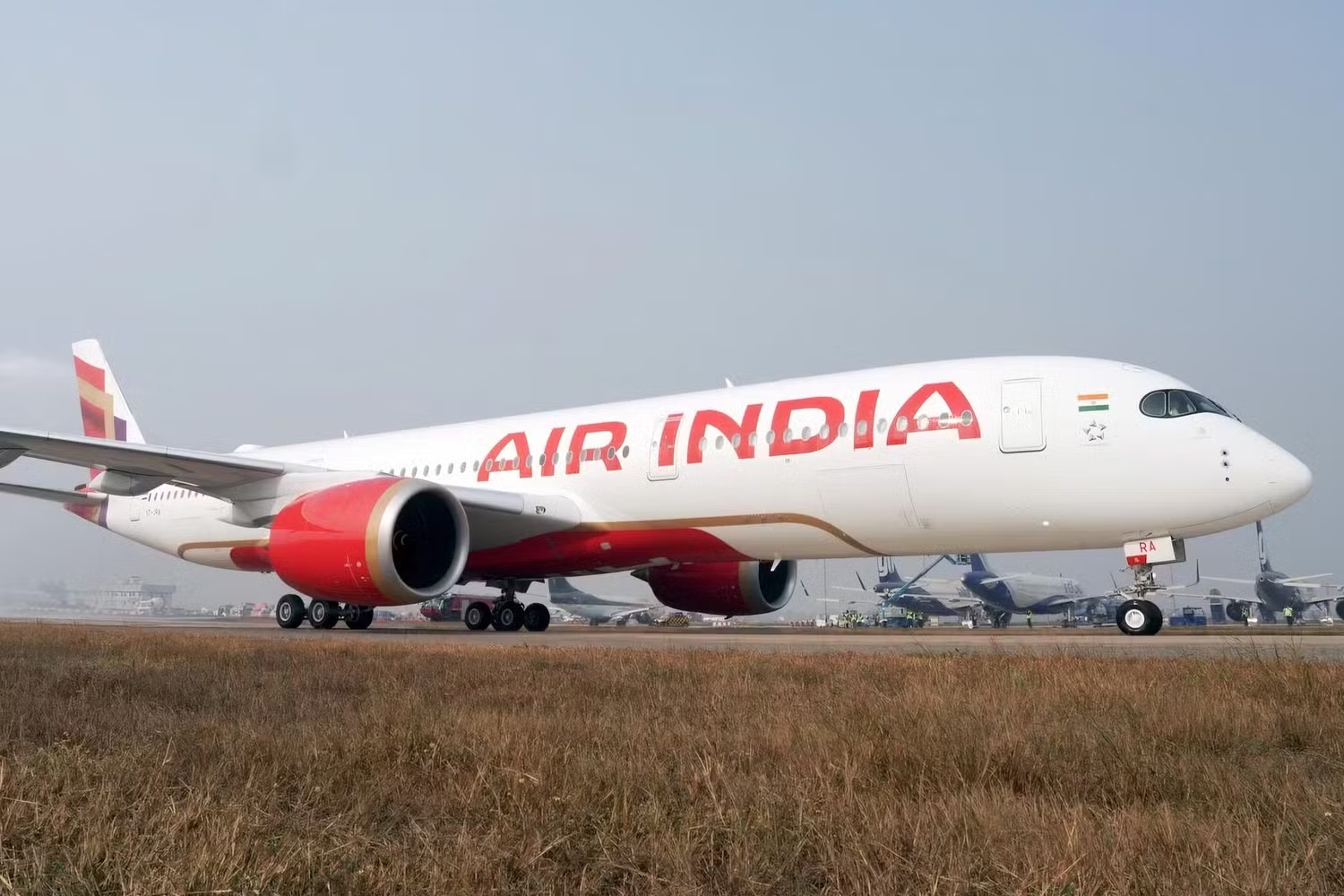
The shift has significantly increased flying time. Air India’s Delhi–London non-stop flight now takes over 12 hours, up from around eight earlier. Its Mumbai–New York route, previously a 13–14 hour non-stop, now operates as a one-stop service via Rome, stretching total travel time to nearly 21 hours.
Fewer flights, higher costs
Indian carriers have sharply reduced their West Asia operations. Daily flights between India and the West have dropped significantly due to airport closures in key transit hubs like Doha and Bahrain, while operations in the UAE remain intermittent.
IndiGo’s international network has shrunk drastically, with only a handful of westbound flights operational. Air India Express has cut its West Asia connections from about 110 daily flights to around 50 ad hoc services, while Air India’s weekly services in the region have dropped from over 250 to about 30–40. Other airlines like Akasa Air and SpiceJet have also scaled back Gulf operations.
Operating costs have surged alongside the disruptions. Aviation turbine fuel (ATF) prices have risen to about $817 per kilolitre in Delhi and Mumbai, while the rupee’s depreciation against the dollar has further increased expenses such as leasing and maintenance.
Longer routes are compounding the burden. Wide-body aircraft burn significantly more fuel over extended durations, with airlines estimating an additional cost of roughly ₹80,000 per hour per flight. To mitigate risks, airlines are also carrying extra fuel, increasing aircraft weight and further raising fuel consumption.
Despite mounting losses, airlines continue operating flights to maintain connectivity. “Flying aircraft has always meant defying nature… now they are defying economics too too,” a senior airline official told TOI.
Carriers including Air India, IndiGo and Akasa have imposed fuel surcharges ranging from ₹199 to $200, while insurance premiums for flights to West Asia have risen sharply.
Crew fatigue concerns
Extended flying hours have also raised concerns over crew fatigue. Air India has received regulatory approval to extend pilot duty hours to 11.5 hours without requiring additional crew.
Pilots, especially those operating Boeing 787 aircraft, have flagged physical strain due to long hours and limited cockpit comfort. “We are pushing our body to the limit of human endurance,” a pilot said, citing continuous alertness required while flying near conflict zozones with GPS disruptions.
Passengers hit by high fares, limited options
Travellers are bearing the brunt of reduced capacity and higher costs. Airfares have surged sharply, with some passengers paying as much as ₹1.8 lakh for one-way tickets on long-haul routes.
With major Gulf carriers such as Emirates, Qatar Airways and Etihad largely out of operation on these routes, passengers are left with limited alternatives. The resulting supply crunch is expected to ..
Ripple effects beyond aviation
The conflict is also impacting multiple sectors in India, TOI reported. Rising input and freight costs are affecting medical device production, while propane shortages have disrupted pharmaceutical manufacturing. Fertiliser output ahead of the kharif season is under pressure due to LNG supply issues.
Industries such as restaurants, air-conditioner manufacturing and automobiles are also facing higher costs and supply disruptions linked to fuel a ..
Credits: Iran War