
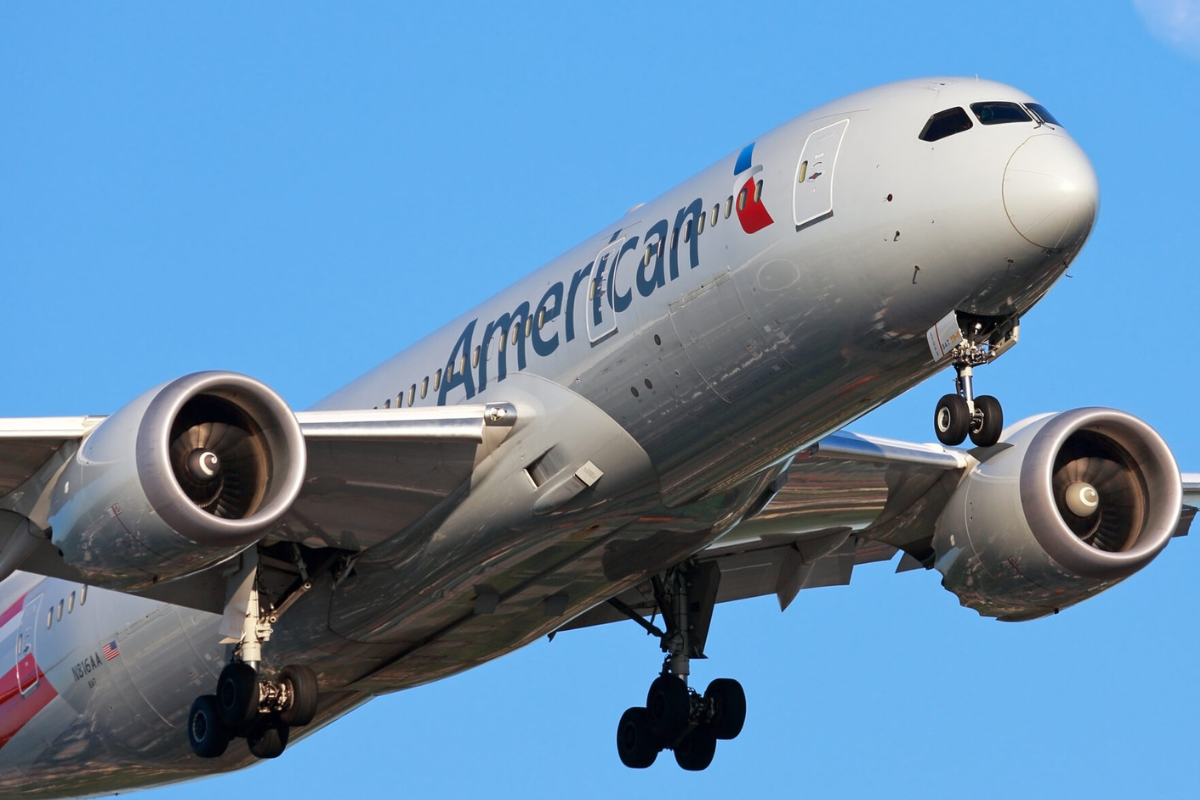
American Airlines marked a historic first on March 8, 2026, operating the first international flight with its Airbus A321XLR.
The long-range narrowbody departed New York’s John F. Kennedy International Airport (JFK) for Edinburgh Airport (EDI) in Scotland.
This marks the inaugural transatlantic crossing of the type by any North American carrier and American’s first single-aisle service across the Atlantic in seven years.
Reviving the New York-Edinburgh Route
The milestone flight revives a route American last served with Boeing 757s until 2018, now operated with modern efficiency.
Running daily through October 24, 2026, it complements the existing Philadelphia–Edinburgh widebody service. It also makes Edinburgh American’s longest narrowbody destination, at roughly 2,829 nautical miles.
Airport celebrations in Scotland underscored the route’s importance for tourism and business ties between the U.S. East Coast and Scotland’s capital.

The A321XLR’s premium-heavy 155-seat configuration delivers an elevated long-haul experience. It offers:
- 20 Flagship Suite lie-flat business class seats in a private 1-1 layout with sliding doors,
- 12 Premium Economy seats in a spacious 2-2 arrangement, and
- 123 Main Cabin seats, including Main Cabin Extra options with extra legroom.
High-speed Wi-Fi and Bluetooth entertainment are standard across all cabins.
American, the first U.S. airline to receive the type, currently operates about four aircraft from a 50-unit order, having debuted them domestically on transcontinental routes in December 2025.
Why the A321XLR Wins on Thinner Routes
The shift to the A321XLR highlights a key industry trend. Narrowbody aircraft like this one often outperform widebodies in fuel efficiency and operating costs on medium- to long-haul “thin” routes with lower passenger demand.
Airbus claims the A321XLR delivers up to 30% lower fuel burn and CO₂ emissions per seat compared to previous-generation aircraft, with significant advantages over many widebodies on comparable missions.
Industry analyses suggest a 15–20% overall seat-cost edge for the A321XLR versus widebodies, driven by several factors.
Narrowbodies have an inherent efficiency from their single-aisle cross-section. They allow higher seating density relative to fuselage volume, often around a 20% structural advantage.
The A321XLR benefits from next-generation engines, CFM LEAP-1A or Pratt & Whitney PW1100G, advanced aerodynamics including Sharklets, and lightweight materials, reducing fuel consumption per seat-mile.
On transatlantic segments like JFK–EDI, widebodies such as the Boeing 787 or Airbus A330 burn more total fuel due to larger size. They have a heavier empty weight, and higher crew/maintenance demands.
While modern widebodies excel on high-demand, ultra-long routes with full loads, they become less economical on seasonal or lower-volume flights where load factors dip.
The A321XLR’s lower trip fuel burn, faster turnarounds, smaller crew requirements, and reduced airport fees make it ideal for right-sizing capacity—cutting costs while sustaining service.
For American, this means trimming select widebody winter routes and redeploying them to busier markets, all while preserving connectivity. The result is lower operating expenses, competitive fares on niche routes, and a smaller environmental footprint per passenger.

A321XLR and Transatlantic Network
American is aggressively expanding A321XLR use to reshape its transatlantic network. Recent schedule filings show the jet powering year-round JFK–Barcelona service during the slower winter months.
From Philadelphia, it will handle extended seasonal flights to:
- Edinburgh (through early January),
- Lisbon (January to late February), and
- Amsterdam (through late March),
The replace Boeing 787s on these lower-demand segments.
This pivot to the fuel-efficient narrowbody allows American to right-size capacity, cut operating costs, and sustain connectivity on thinner or off-peak routes where widebodies would be uneconomical.
By trimming select long-haul winter operations, the carrier can redeploy larger aircraft to high-demand markets while preserving year-round options for passengers.
Conclusion
The strategy mirrors a broader industry shift toward long-range narrowbodies for point-to-point service. For travelers, it means more flight choices, competitive fares, and premium Flagship products on routes that might otherwise face seasonal cuts.
With additional A321XLR deliveries expected throughout 2026, American is well-positioned for further selective transatlantic growth.
Credits: American Airlines