
Company Profile: Ariana Afghan Airlines
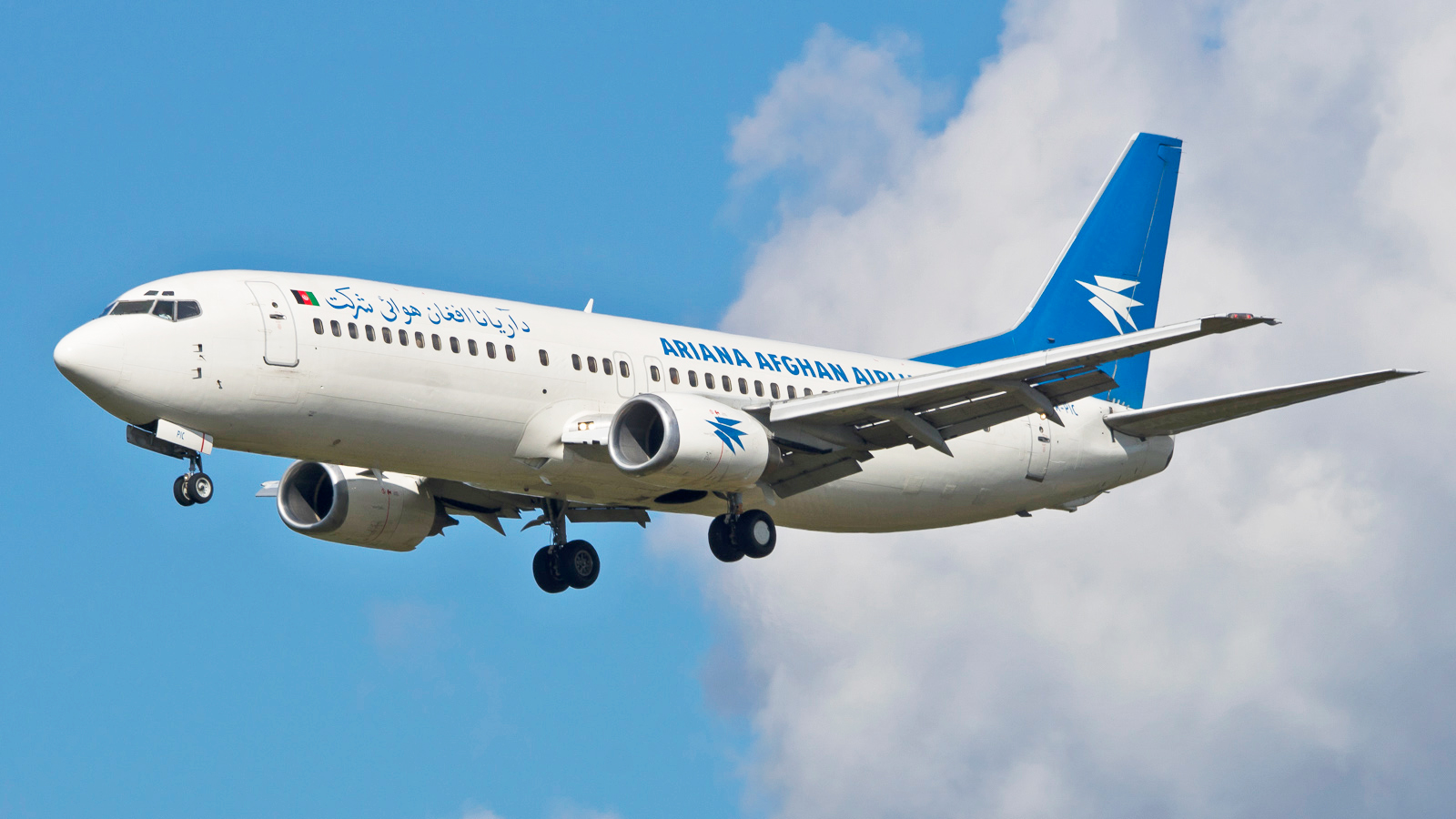
Ariana Afghan Airlines Co. Ltd., also known simply as Ariana, is the national flag carrier and largest airline of Afghanistan. Founded in 1955, it is the country’s oldest airline and is wholly state-owned. Headquartered in the Shāre Naw district of Kabul, Ariana operates from its main hub at Hamid Karzai International Airport (KBL) in Kabul and a secondary hub at Kandahar International Airport (KDH). The airline provides domestic flights to four destinations within Afghanistan and international services to countries including China, India, Pakistan, Russia, Saudi Arabia, Turkey, and the United Arab Emirates. Its fleet currently consists of Airbus A310-300, Airbus A320-200, and Boeing 737-400 aircraft, configured with Economy and Business Class options. Ariana has been banned from operating in the European Union since October 2006 due to safety concerns. The airline’s IATA code is FG, and its ICAO code is AFG.
Brief History
Ariana Afghan Airlines was established on January 27, 1955, as Aryana Airlines, with the assistance of Indamer Co. Ltd., an Indian aviation company that initially held a 49% stake, while the Afghan government owned the majority. The airline began operations with three Douglas DC-3s, serving routes to Bahrain, India, Iran, and Lebanon. In 1957, Pan American World Airways acquired the 49% stake, providing technical and management support, and introduced two DC-4s to the fleet. By 1960, Ariana operated the “Marco Polo” route, connecting Kabul to international destinations like Delhi, Karachi, and Frankfurt. In the early 1960s, U.S. aid of $1.1 million (equivalent to $12 million in 2024) helped capitalize the airline.
By March 1970, Ariana employed 650 people and operated a fleet including a Boeing 727-100C, a CV-440, a DC-3, and two Douglas DC-6s, serving the Middle East, India, Pakistan, the USSR, and Europe. Domestic services were handled by Bakhtar Alwatana, a government-established entity for domestic routes. In 1979, Ariana introduced its first widebody aircraft, a McDonnell Douglas DC-10-30, but sold it to British Caledonian in 1985 during the Soviet-Afghan War due to Soviet pressure to use Tupolev Tu-154s. In October 1985, Bakhtar Afghan Airlines absorbed Ariana, becoming the new national carrier, but merged back into Ariana in February 1988 to serve both short- and long-haul routes.
The 1990s were challenging due to the Taliban’s control following the 1996 fall of Kabul, leading to economic sanctions and restricted international operations. The fleet was reduced to a few Russian-built An-26s, Yakovlev Yak-40s, and three Boeing 727s for domestic routes. Reports indicate that from 1996 to 2001, Ariana’s operations were misused by Al Qaeda, with flights allegedly transporting militants, arms, cash, and opium through the UAE and Pakistan. UN sanctions in 1999 further limited operations, grounding the airline completely by November 2001.
After the Taliban’s overthrow in 2001 during Operation Enduring Freedom, Ariana resumed operations in December 2001 with UN sanctions lifted, allowing international flights. In 2002, India donated three ex-Air India Airbus A300s to aid recovery. Despite rebuilding efforts, the airline faced ongoing challenges, including a 2006 EU ban due to safety issues. As of 2025, Ariana continues to operate a limited fleet, serving domestic and regional routes, but struggles with reliability and customer service, as reflected in some negative passenger reviews. The airline has faced significant losses, with 19 aircraft written off in 13 incidents by 2012, seven of which were fatal, resulting in 154 deaths.
Ariana’s logo, designed by the Shah of Afghanistan in 1955, features the Afghan Swallow against a blue field inspired by lapis lazuli, symbolizing Afghan heritage. Despite its turbulent history, Ariana remains a symbol of national pride, striving to provide safe and reliable air transport while navigating Afghanistan’s complex socio-political landscape.