
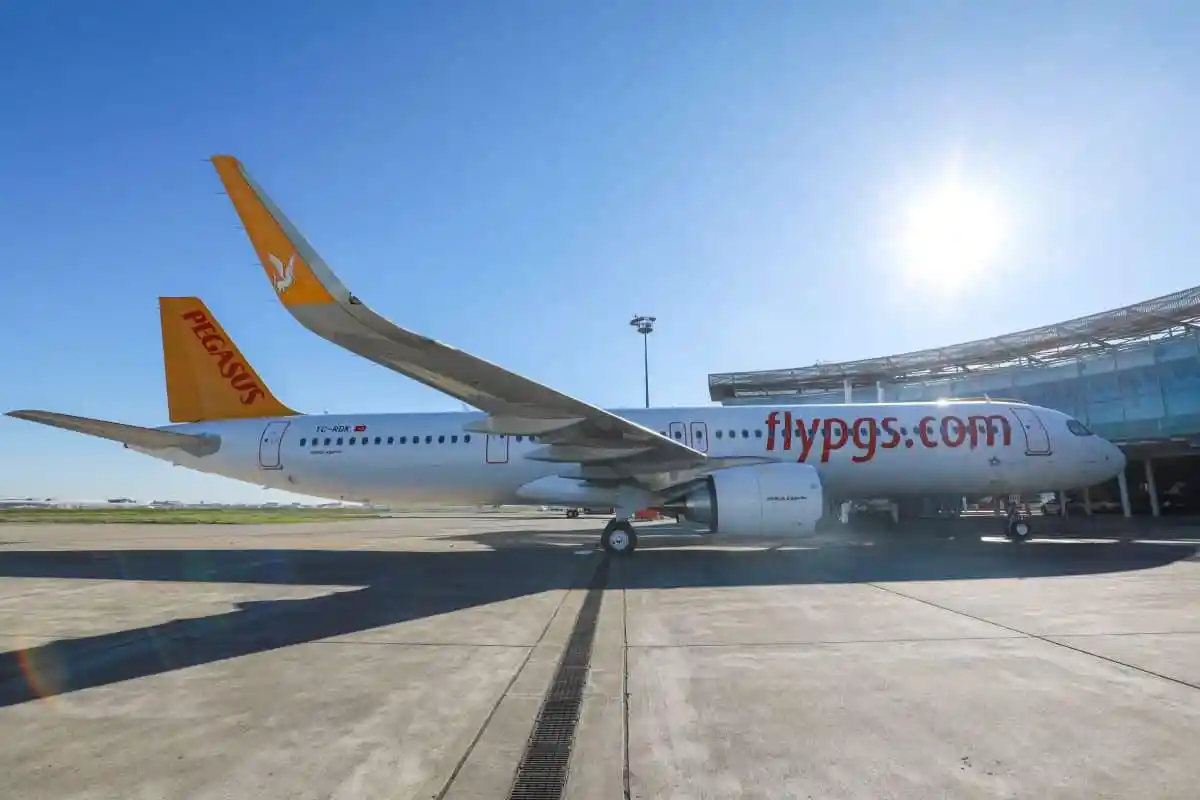
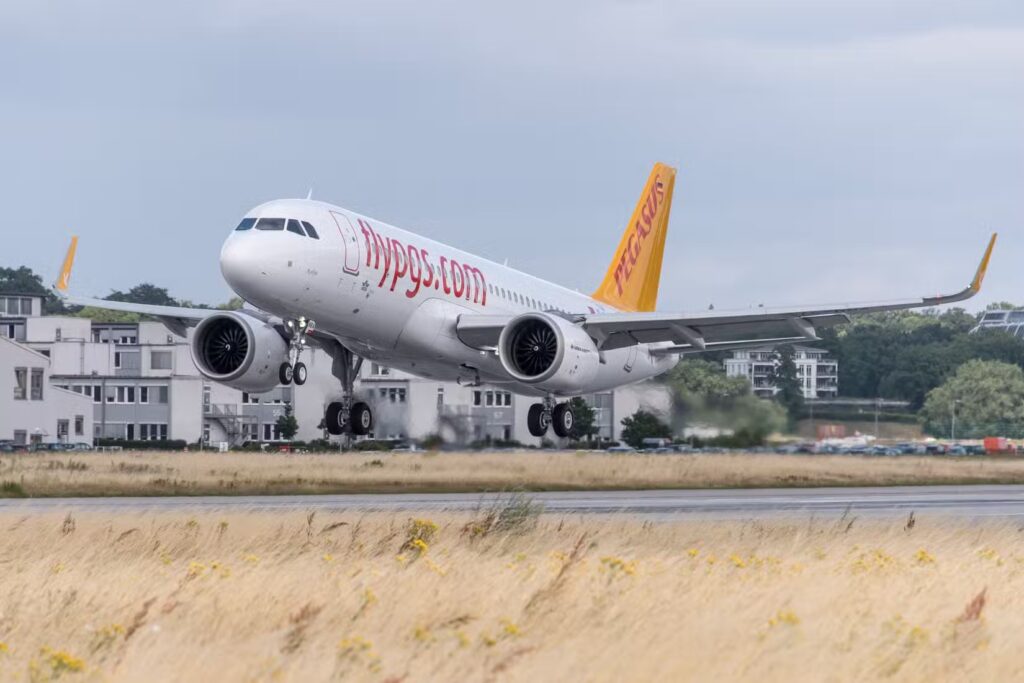
Severe storms around Istanbul have heavily impacted flight operations in the region, with some aircraft caught on camera attempting to land amid strong winds. In one attempt, a Pegasus Airlines A320neo was forced to abandon its landing at Istanbul’s Sabiha Gokcen Airport just seconds before touchdown.
With scores of flights canceled out of Istanbul Airport and Sabiha Gokcen during the storm, the incident raises questions over the safety of attempting landings under such conditions, as flights typically divert to other airports when the weather is too severe.
Pegasus A320neo Botches Landing In Istanbul

Parts of Turkey have been under siege from poor weather in recent days, most notably Istanbul, which has been battered by severe winds and rain. Video footage has emerged of a Pegasus Airbus A320neo attempting to land at the city’s secondary airport, Sabiha Gokcen International Airport (SAW), amid the inclement weather, ultimately failing and initiating a go-around at the last moment. As the aircraft descended to the runway, gusts of wind significantly destabilized its approach, causing it to wobble just yards above the runway.
At this critical moment, the flight crew decided to abort the landing, performing a go-around maneuver rather than trying to complete the touchdown. At this stage, it is not known where the Pegasus flight originated from or how many passengers were onboard at the time, but its A320neo aircraft can seat up to 186 passengers. It is also unclear whether the A320neo attempted another landing at SAW or if it diverted to another airport, where conditions were more favorable. Simple Flying has reached out to Pegasus Airlines and Sabiha Gokcen Airport regarding this incident and will update this story accordingly.
How Safe Are Windy Landings?

Many readers will have seen previous videos of commercial aircraft landing amid adverse conditions. Although pilots executing these landings are praised for their technical expertise and mental composure, there are understandable safety concerns over performing such maneuvers during poor weather.
As per Airbus specifications, the A320neo can handle a maximum crosswind of 38 knots (which includes gusts), so any attempt to land amid winds exceeding this limit would warrant an immediate go-around or diversion to a suitable nearby airport. It is worth noting that this limit is dependent on other operational factors too, including runway surface conditions and available runway length, so it can be much lower than 38 knots at times.
As can be seen in the Pegasus video above, one of the most effective techniques of landing during high winds is “crabbing.” This is when pilots approach the runway with the aircraft turned towards the wind, helping to stabilize it during powerful crosswinds. With this maneuver, the plane is essentially flying sideways, similar to how a crab walks sideways. The pilot then needs to correct the aircraft’s alignment at the final moment before touching down, as planes cannot safely land while still in a crabbing position.
The Pegasus Airlines Fleet
Turkish low-cost carrier Pegasus Airlines is one of the country’s largest airlines with a fleet of over 120 aircraft, the majority of which are Airbus A320-family jets. It also operates one of the world’s youngest commercial fleets, with over 100 A320neo and A321neos, all with decades of service life ahead of them.
As a budget airline with an all-economy class fleet, Pegasus’ A320neos can seat up to 186 passengers, while its larger A321neo seats up to 239 passengers. The airline now serves over 150 destinations across its extensive short and medium-haul network — which covers over 50 countries in Africa, Europe, and the Middle East — and served over 37 million passengers in 2024.
Established in 1990, Pegasus has historically been an all-Boeing 737 operator, flying models from the 737-300 up to the 737NG, before transitioning to the A320-family starting in the mid-2010s. Now with just a handful of 737-800s left in its fleet, Pegasus is an upcoming 737 MAX customer, holding a huge $6 billion order with Boeing for up to 200 MAX aircraft, which includes 100 firm 737 MAX 10s and another 100 options.
Source: simpleflying