

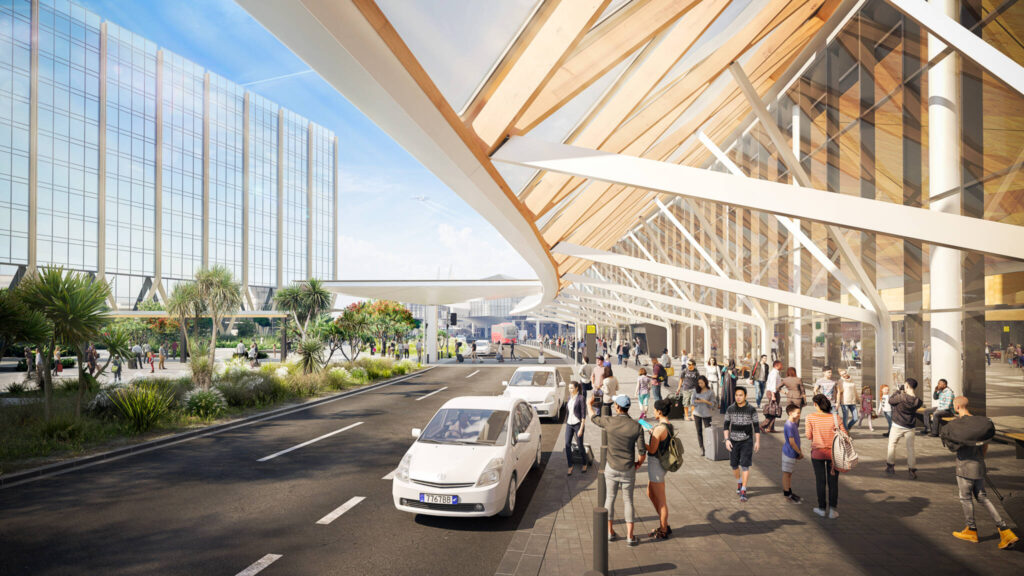
Auckland Airport is set to transform the travel experience with a major upgrade to its check-in process, eliminating long queues and outdated counters.
This ambitious project will create a cutting-edge, technology-driven departures area, uniting domestic jet and international passengers under one roof for the first time since the 1970s.
Over the next four years, the airport’s 13,000m² check-in hall will evolve into a digital, user-friendly space designed with the modern traveller in mind.
The revamped layout will prioritize intuitive flow, reduce waiting times, and deliver a welcoming start to every journey.
Carrie Hurihanganui, Auckland Airport’s Chief Executive, called this a landmark moment in the airport’s redevelopment. “This is a once-in-a-generation chance to redefine the check-in experience,” she said.
“We’re building a gateway that meets the expectations of today’s travelers, offering a fast, seamless process powered by smart technology and supported by dedicated staff.”
A Shift to Digital Convenience
Travellers worldwide are demanding faster, tech-supported experiences. Surveys reveal that 77% of passengers—and 90% of those under 25—want to use smartphones for digital passports, payments, and travel details.
Auckland Airport’s upgrade aligns with this trend by introducing self-service kiosks and automated bag drops, replacing about 60 traditional check-in desks by the decade’s end.
These changes will streamline processes, reduce manual checks, and lower the risk of ineligible travellers reaching gates.
The new system draws inspiration from global leaders like Changi Airport, Dubai, and Heathrow, where self-service technology has revolutionized terminal operations.
Auckland Airport has already tested this approach in one check-in zone, swapping 30 desks for 36 kiosks and 22 bag drops. Feedback from airlines has helped refine the design, ensuring a smoother rollout across the terminal.
Flexible, Shared Technology
A key feature of the upgrade is its “common-use” approach. Kiosks and bag drops will be shared among airlines, boosting efficiency and reducing redundant infrastructure.
This flexibility not only optimizes space but also lowers barriers for new airlines, fostering competition and expanding options for passengers.
“Shared-use spaces are cost-effective to build and operate,” Hurihanganui noted. “They’re a cornerstone of our vision for a modern, efficient airport.”
The technology also lays the groundwork for future innovations, such as biometric systems and digital travel credentials.
These advancements, already in use globally, integrate secure data like biometrics and cryptographic algorithms. This speeds up check-in, border processing, and boarding while prioritizing privacy.
Uniting Domestic and International Travel
Currently, 27 airlines operate from Auckland’s international terminal, serving 42 global destinations. When the new domestic jet terminal opens, flights to New Zealand cities will also check in through this modernized hub.
“Moving away from desk-based check-in frees up space, eases congestion, and improves flow,” Hurihanganui explained.
The expanded terminal will grow by 2,800m², enhancing amenities and pedestrian movement while connecting seamlessly with the domestic terminal under construction.
This unified approach will simplify transfers, making Auckland Airport a more cohesive gateway for all travellers. The shared infrastructure also supports cost efficiency, ensuring the airport remains competitive and sustainable.
Navigating Construction Challenges
The transformation won’t happen overnight. Construction will begin in early 2026, with major work on the terminal’s front face to support new amenities and the domestic terminal connection.
To minimize disruption, a temporary check-in pavilion will be built near the Transport Hub, with work starting later this year. This will maintain capacity during the phased upgrades.
“We’re committed to keeping the airport running smoothly while prioritizing the safety of travelers and staff,” Hurihanganui said. Close collaboration with airlines will ensure operations remain efficient throughout the transition.
Conclusion
Auckland Airport’s overhaul reflects a global shift toward smarter, passenger-focused airports. By embracing digital innovation, flexible infrastructure, and a unified terminal design, the airport is poised to deliver a world-class experience.
“This project is about creating a future-ready gateway for New Zealand,” Hurihanganui said. “When it’s complete, travellers will enjoy a seamless, modern journey that rivals the best airports in the world.”
Credit: Auckland Airport