

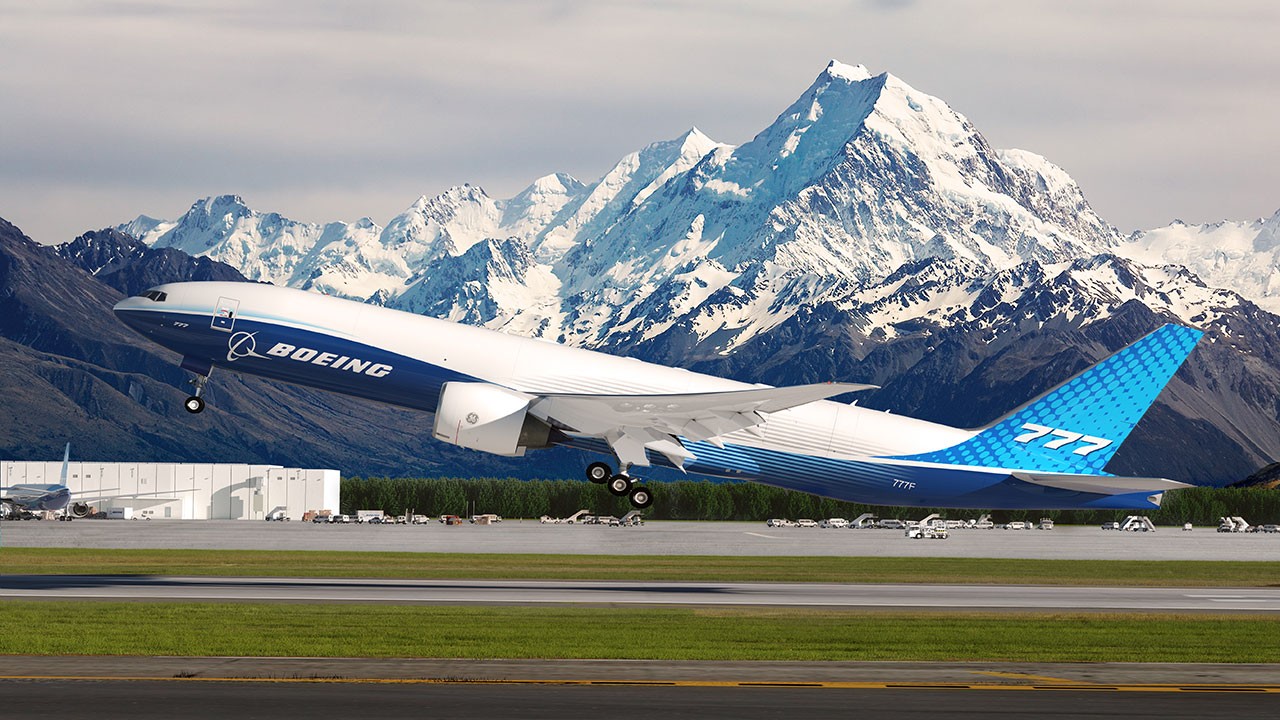
Many articles have been written about the upcoming Boeing 777X family of aircraft, and for good reason, as the line has been a long time coming thanks to disruptions caused initially by COVID shutdowns, the subsequent supply chain issues that have plagued the industry, not to mention the legal battles the manufacturer has been dealing with since high-profile crashes in recent years.
After all that, series production finally began for the 777-8F, the freight variant of the 777X, on July 21 this year. The aircraft will be the first to enter the freight market alongside its predecessor, the Boeing 777F, which is still receiving orders to this day. For Boeing, this aircraft entering service will be a milestone, and a real step forward after the setbacks of recent years. This article takes a look at the 777-8F, and why the aircraft looks to change the air freight industry.
The Latest On The 777-8F
According to AIN on July 25, Boeing began series production of the 777-8 Freighter at its widebody factory in Everett, Washington on July 21, the occasion marked by the ceremonial drilling of the first hole in a 777-8F wing spar by a robotic arm. This hole was the first of 938 drilled into each 777-8F wing assembled by the robotic arm, called Spar Assembly Robotic Cell (SPAC), working in five eight-hour shifts, according to Ben Linder, vice president and chief engineer for Boeing’s 777 and 777-8F programs, who spoke to reporters there.
Each 108-foot-long spar forms a major structural component of the wing, with one being located at the front of the wing, and one at the back. One of the features that makes the 777X line so anticipated by fans and airlines alike is the excellent efficiency of the plane, and elements like these spars are a large part of that, as each is made using composite materials, specifically 392 miles of carbon fiber tape. As an interesting side note, aircraft made from composite materials also have higher cabin pressures, reducing jet lag.
Even with this news of progress on the 777-8F, the aircraft is still is expected to enter service in 2028. According to Linder, Boeing aircraft currently provide more than 90% of the global air freighter capacity, and the company’s commercial market outlook for 2025 projected a 67% increase in the global freighter fleet by 2044, including 885 large widebody aircraft. Jason Clark, 777/777X vice president and general manager, said the following about the event:
“It may seem small, [but] it’s that one hole…that gets everything started. All the work that goes into starting a program, the years of development, the years of engineering, the years of supply chain, procurement, and contracting, and all the other pieces—the blood, sweat, and tears—all that innovation comes together and is represented in the first in that first hole.”
777-8F Orders And The Boeing Freighter Backlog
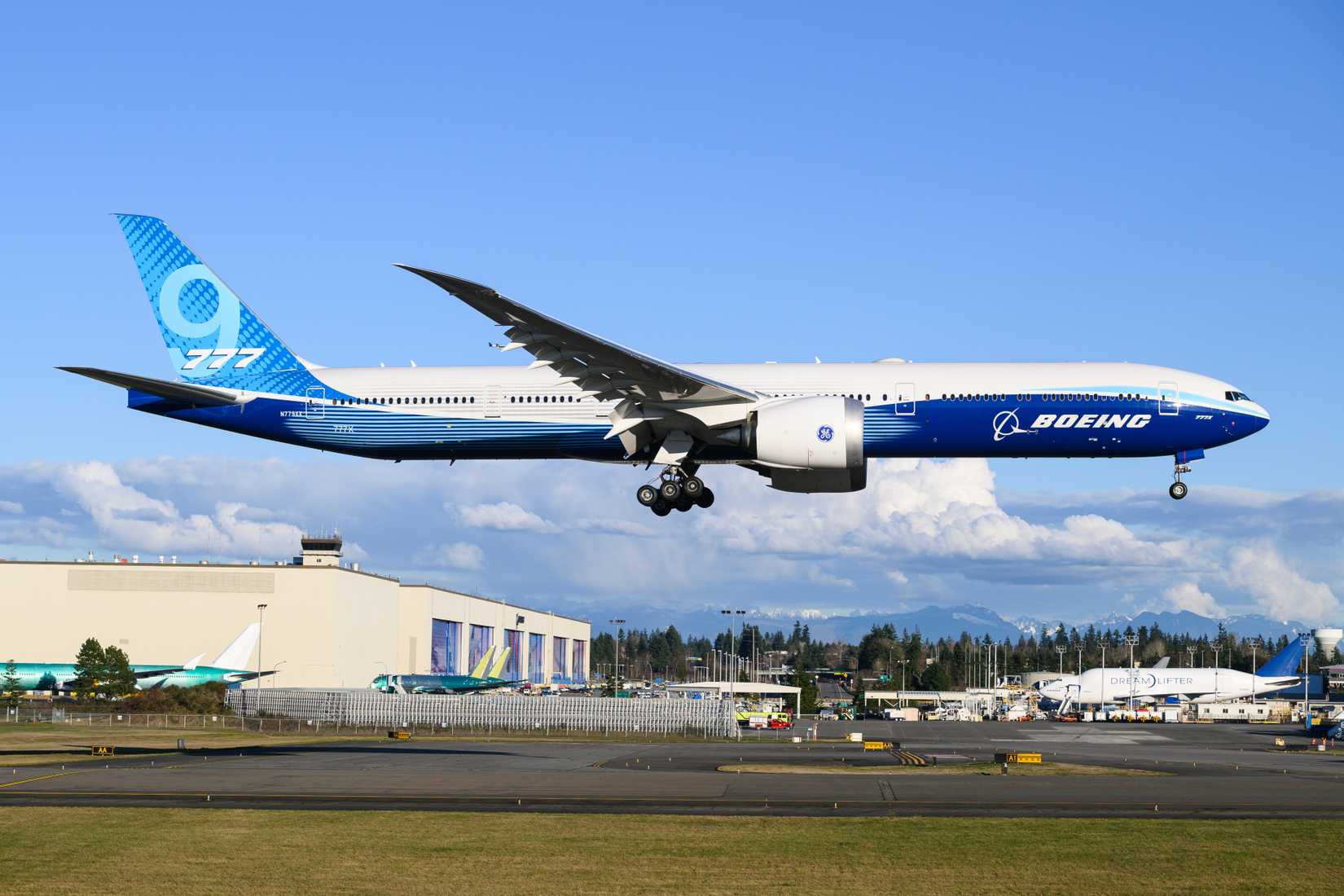
As of July, there are a total of 59 orders for 777-8Fs, with delivery expected by airlines and cargo carriers worldwide, including Qatar Airways, Lufthansa, ANA, Cargolux, and Silk Way West. According to the Stat Trade Times, the manufacturer has a backlog of 93 freighters, 65 of these being for the 777F and 28 for the 767-300 freighter.
While these previous-generation metal-winged freighters lack the fuel efficiency of the newer 777-8F, freight airlines have seen a window to meet steadily rising demand in the industry, and aim to fill it with these older models, making hay while the sun shines, so to speak. MSC Air Cargo is one such company that plans to purchase two more Boeing 777 freighters as part of its fleet expansion. Jannie Davel, CEO of MSC Air Cargo, said the following at June’s air cargo Europe and transport logistic event in Munich, confirming plans to expand:
“We have been growing steadily now. And if the opportunity arises and the demand stays, we will explore it. We need to grow a little. Right now, we have five freighters, four Boeing 777Fs operated by Atlas Air and one owned and operated by MSC Air Cargo, and two more are on the way.”
| Unfilled Boeing Freighter Orders | ||||
| Customer Name | Country | Region | Model Series | Unfilled Orders |
| UPS | USA | North America | 767-300F | 14 |
| Unidentified Customer | – | – | 767-300F | 8 |
| FedEx Express | USA | North America | 767-300F | 6 |
| Unidentified Customer | – | – | 777F | 25 |
| Emirates | United Arab Emirates | Middle East | 777F | 11 |
| FedEx Express | USA | North America | 777F | 8 |
| Volga-Dnepr UK Ltd | Russian Federation | Europe | 777F | 6 |
| National Airlines | USA | North America | 777F | 4 |
| Silk Way Airlines | Azerbaijan | Central Asia | 777F | 4 |
| Turkish Airlines | Turkiye | Europe | 777F | 4 |
| DHL Aviation Americas | USA | North America | 777F | 2 |
| CMA CGM | France | Europe | 777F | 1 |
| Total | – | – | – | 93 |
For Boeing, the pressure is on to make the delivery of these aircraft before the International Civil Aviation Organisation’s (ICAO) emissions compliance deadline in 2027, which will disallow production of these aircraft, due to them falling short of the new allowed emissions levels. However, in a May interview with Aviation Week, Boeing’s new president and CEO, Kelly Ortberg, expressed confidence in Boeing delivering the remaining 777F’s on time:
“We’re quite comfortable in being able to deliver the metal-wing freighters and meeting the certification timeline. So as you know, we have another freighter version with the composite wing, so that’ll come later. But yes, we’re pretty comfortable with our ability to do that, and our manufacturing flow for the freighters is going quite well.”
Advantages Of The 777-8F
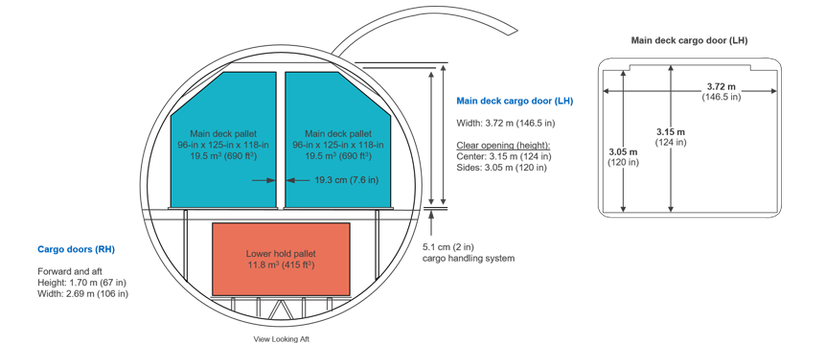
Readers have likely heard it a hundred times before, but it bears mentioning that the 777X, specifically the freighter variant in this case, has several advantages over its predecessor, the 777F. Notably, the variant is set to be the largest and most efficient twin-engine cargo plane in the industry. For freight purposes, the main door is a standout feature, with a width of 146 inches and a clear opening height of 124 inches in the center and 120 inches at the sides, according to Boeing.
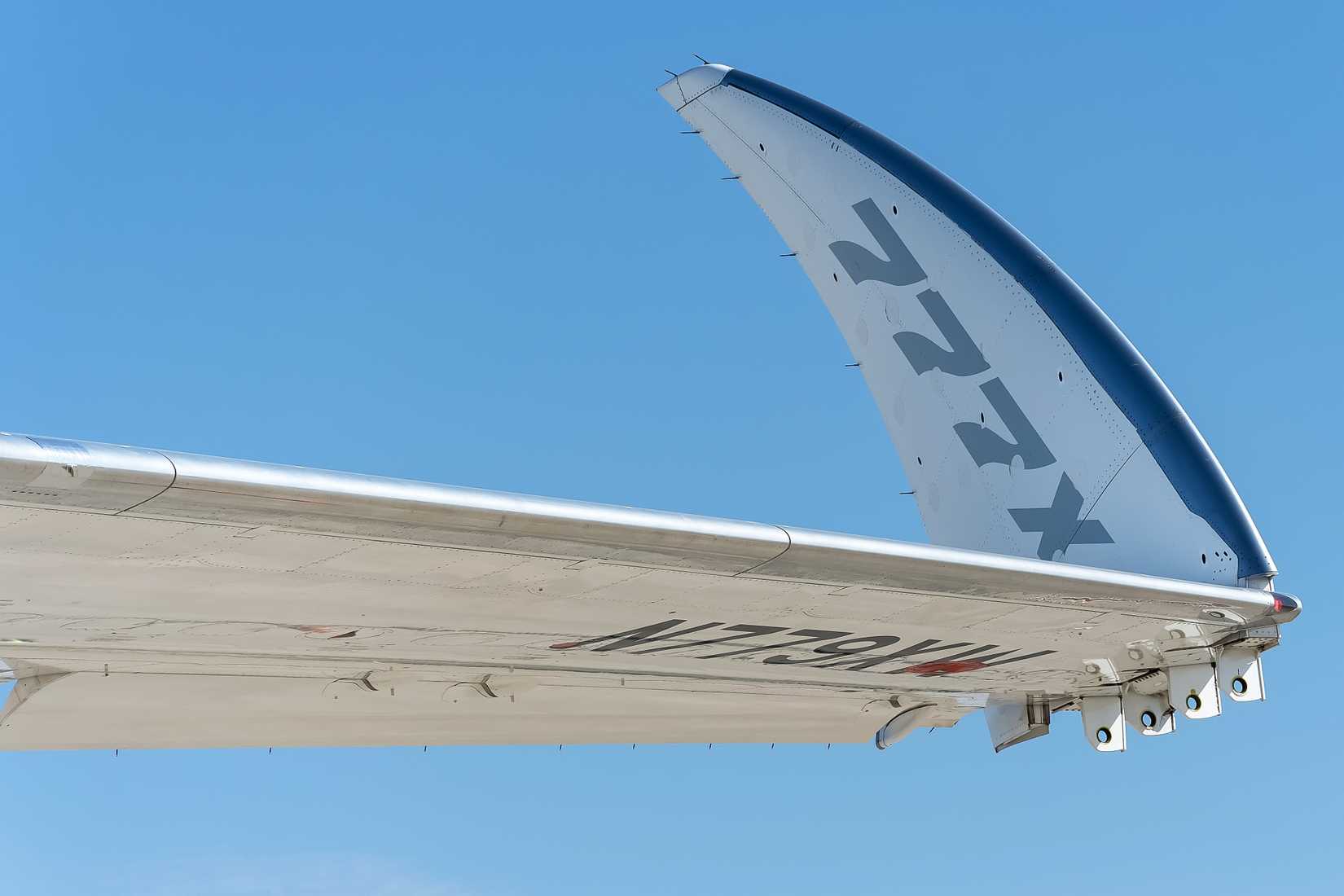
Like the 777F, the 777-8F can carry 10-foot tall pallets, but it has a much greater maximum takeoff weight and payload capacity, as seen from specifications below. It also has greater length and a wider wingspan, and thanks to the folding wingtips the variant has in common with the 777-8 passenger variant the freighter is based on, it enjoys the efficiency benefits of a wide wingspan without having to utilize specialized gates or loading facilities at the airport, specifically as a Code 4E aircraft.
| Specifications of the 777-8F and 777F Compared | ||
| Variant | 777-8F | 777F |
| Capacity | 27,056 cubic feet | 23,051 cubic feet |
| Range | 4,410 nautical miles | 4,970 nautical miles |
| Maximum Payload | 247,500 pounds | 226,800 pounds |
| Length | 232 feet 6 inches | 209 feet 1 inches |
| Wingspan | 235 feet 5 inches | 212 feet 7 inches |
| Fuel Capacity | 52,136 US gallons | 47,890 US gallons |
| Maximum Takeoff Weight | 805,000 pounds | 766,800 pounds |
| Engines | 2x GE9X-105B1A110,000 pounds (thrust) | 2x GE90-110B/-115B110,000–115,300 pounds (thrust) |
According to AirGuide in 2022, Qatar Airways will be the launch customer for the 777-8F, with an order of 34 aircraft and 16 options. The aircraft were intended to replace its fleet of 777F’s, which were delivered in 2009. The first delivery of the 777-8F was initially expected in 2027, but as mentioned earlier, delays at Boeing have pushed that back to 2028.
Orders So Far
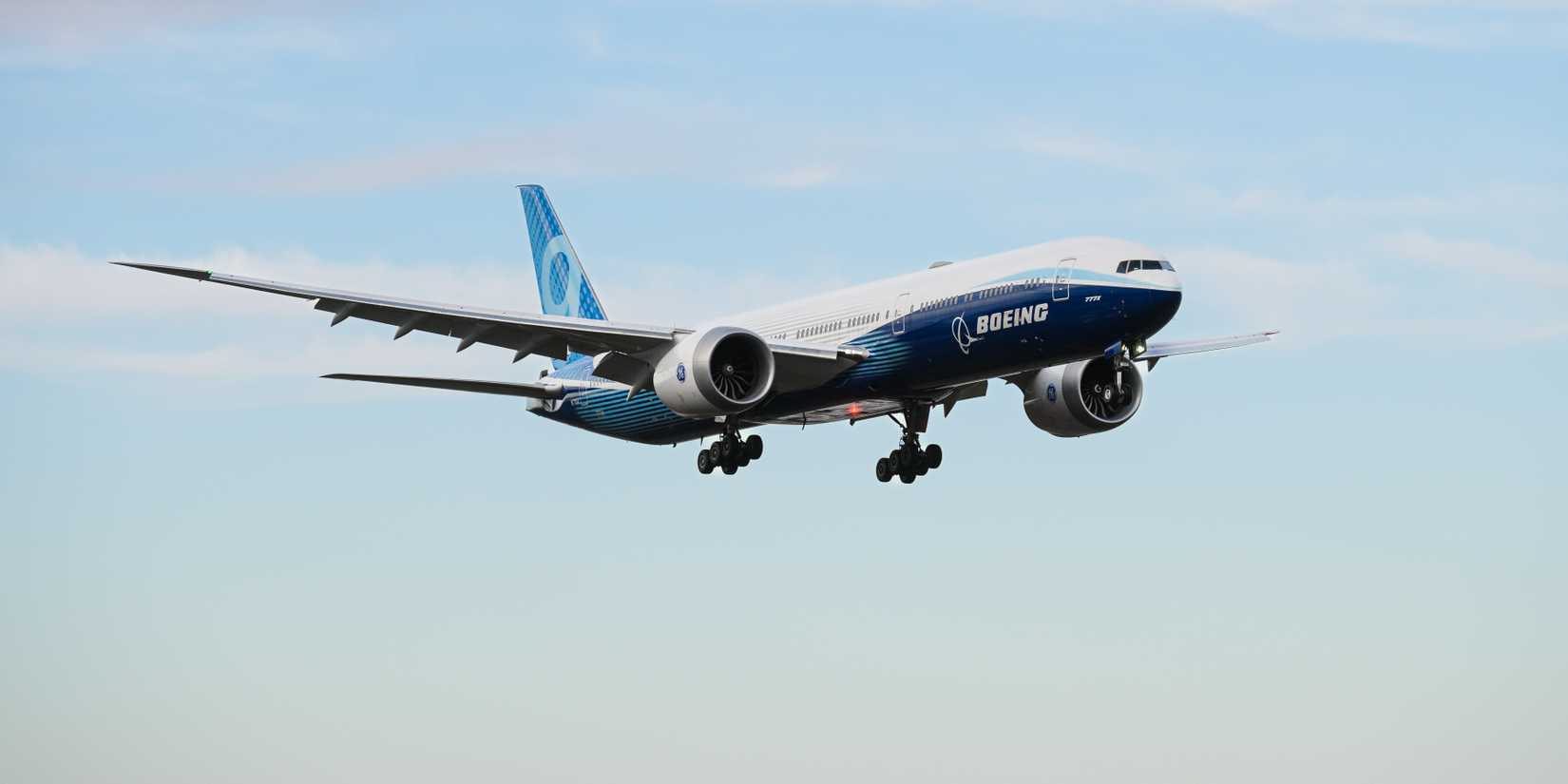
As of July, Boeing’s orders and deliveries data do not specifically mention the 777-8F, according to the Stat Trade Times, but the latest from ch-aviation includes 55 firm orders out of the reported total of 59. The following are the airlines and the number of firm orders made for the variant:
| Airline | Number of Firm 777-8F Orders |
| Qatar Airways | 34 |
| Cargolux | 10 |
| Lufthansa/Lufthansa Cargo | 7 |
| ANA-All Nippon Airways | 2 |
| Silk Way West Airlines | 2 |
In general, the 777X is attractive because it is expected to deliver a 30% reduction in fuel burn and emissions levels compared to the previous generation airplanes it will replace, such as the 747, 767, and legacy 777s, which will make it the first Boeing freighter to be compliant with the new ICAO restrictions, competing with the new Airbus freighter, the A350F, which also makes extensive use of composite materials. The A350 is expected to enter service in 2027, a little earlier than the 777-8F, which may give the Boeing competitor a bit of an edge in the freight market for a time.
While the ceremonial ‘drilling of the spar’ may be a small step forward, teams at the same facility are also producing skin panels and stringers for the wings, which when integrated with the spars, will provide the wings with strength and an aerodynamic shape, forming the basic structure of the wing. With parts coming together, progress will slowly, but surely, be made. It is possible that the first 777-8F may be ready ahead of schedule, if all goes well, and production will only get faster from there, as teams become more familiar with processes.
Credits: Boeing