
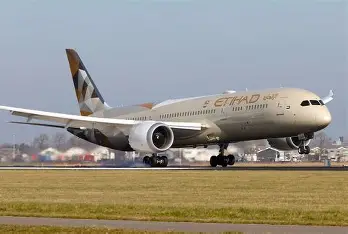
Etihad Airways has unveiled a major expansion into Africa, announcing six new destinations as part of a broader strategy to capture growing demand for connectivity between Africa, the Middle East and Asia. The Abu Dhabi-based carrier will launch routes linking Zayed International Airport with Accra, Asmara, Lagos, Kinshasa, Lubumbashi and Harare between November 2026 and March 2027. Frequencies will range from three to seven weekly flights, with Lagos receiving daily service.
The move reflects Etihad’s focus on high-growth African markets, where demand for passenger travel and cargo capacity is outpacing supply. The airline is positioning Abu Dhabi as a strategic transit hub, enabling one-stop connections between Africa and key markets in China, India and wider Asia.
The expansion builds on Etihad’s recent growth in China and its partnership with China Eastern Airlines, as well as its joint venture with Ethiopian Airlines. Together, these initiatives are designed to strengthen a new intercontinental corridor linking Africa and Asia via the Gulf.
Cargo is central to the strategy. Etihad aims to leverage rising trade flows in sectors such as manufacturing, agriculture and pharmaceuticals, using both dedicated freight services and belly-hold capacity on passenger flights.
The airline cited increasing economic ties between the UAE and African countries, particularly in energy, infrastructure and mining, as a key driver behind the expansion.
Chief executive Antonoaldo Neves said the new routes respond to “structural demand” for connectivity, adding that Africa represents a “natural next step” in the airline’s network growth.
Overall, the expansion underscores intensifying competition among Gulf carriers to position their hubs as global connectors, with Africa emerging as a key battleground for future growth in both passenger and cargo markets.
Credits: Etihad Airways