
Turkish Airlines has replaced both its chief executive and chairman of the board and said it would not pay a dividend from its 2025 profit, citing uncertainty tied to the conflict in the Middle East, in a shakeup that comes as the carrier faces higher fuel costs and regional flight disruptions.
Turkey’s flagship carrier said Ahmet Olmuştur, who had served as chief commercial officer, was appointed chief executive after the retirement of longtime CEO Bilal Ekşi. Murat Şeker was named chairman of the board, replacing Ahmet Bolat, who stepped down, while Metin Gülşen was appointed chief financial officer and Harun Baştürk became chief commercial officer. Reuters and Bloomberg both reported the changes, which were also reflected in the company’s disclosures tied to its April 9 annual general assembly.
The airline said it would retain all of its 2025 net profit of 118.2 billion Turkish lira ($2.65 billion) instead of distributing a dividend to shareholders. According to Reuters, the company said keeping a strong cash position was in shareholders’ long-term interest because of the “ongoing war environment in the Middle East and the uncertainty it entails.”
The move marks a break from the airline’s recent payout pattern. Turkish Airlines did not pay a dividend from its 2023 profit, but in 2025 it approved a cash dividend of a gross 6.88 lira per share from its 2024 earnings.
The leadership change has taken place at a tense moment for the airline industry and for Turkey’s largest carrier in particular. The overhaul comes as airlines deal with flight restrictions and high fuel costs amid the volatility in oil prices, capacity pressure and disruptions linked to conflicts in the Middle East.
Despite those pressures, Turkish Airlines reported strong traffic growth for March. Passenger traffic rose 16 percent year on year to 7.2 million, the load factor climbed 6.1 percentage points to 83.6 percent and the airline carried 21.3 million passengers in the first quarter, up 12.7 percent from a year earlier. Its fleet also had expanded to 528 aircraft by the end of March.
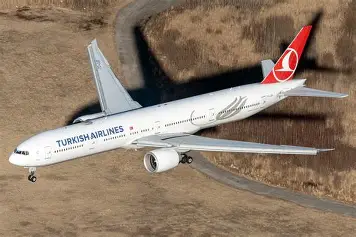
Credits: Turkish Airlines