
The China Eastern MU5735 investigation took a major step forward on April 29 when the US National Transportation Safety Board, responding to a January 2026 Freedom of Information Act request, released material that includes flight data recorder contents from the March 21, 2022 crash near Wuzhou, in which all 132 on board died. The material is not a final accident report.
According to the released data, the fuel control switches for both engines on the China Eastern Airlines Boeing 737-800 moved from RUN to CUTOFF approximately 23 seconds before the FDR stopped recording. The autopilot disengaged at the same point. Roughly three seconds later, one of the cockpit yokes was pushed forward, sending the aircraft into the near-vertical descent that has defined the publicly known footage of the loss.
What the China Eastern MU5735 data shows
The NTSB release, as reported by CNN, is a partial dataset rather than a finding of cause. It does not establish which pilot manipulated the fuel switches or the yoke, nor does it rule out a system fault that could have driven the cockpit indications. China’s Civil Aviation Administration leads the official MU5735 investigation; CAAC has not publicly responded to the FOIA release as of publication.
AirLive and Simple Flying both report the FDR contents are consistent with publicly available trajectory data — a steep, sustained nose-down attitude that did not recover. The aircraft was at FL290 when control was lost on a routine domestic sector from Kunming to Guangzhou.
The Boeing 737-800 fuel control switches sit on the centre pedestal between the two pilots and require a deliberate movement past a detent to leave the RUN position. Industry sources describe inadvertent activation as unlikely but not impossible. The same family of switches is at the centre of the still-open investigation into the 2024 Air India 171 fuel-cutoff event, and the NTSB has now publicly tied data on two separate fatal events to the same cockpit input.
China Eastern MU5735 investigation timeline
China’s investigation into MU5735 is now in its fifth year. The CAAC has issued two preliminary statements since the crash but has not published a final report. Chinese officials previously declined to share complete FDR contents internationally, which is why a third-party FDR analysis emerged through the NTSB FOIA process rather than through CAAC’s own investigation channels.
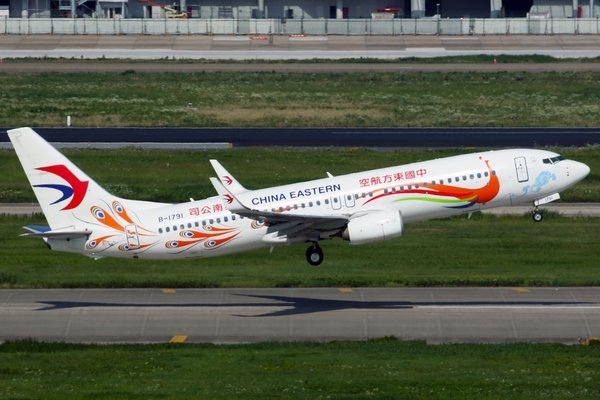
The aircraft, registered B-1791 and ten years old at the time of the loss, had no recorded airworthiness issues prior to the flight. Maintenance records, crew duty records and any cockpit voice recorder content remain under CAAC seal. Independent analysts have been working from limited Chinese disclosures since 2022, and the NTSB material is the first authoritative timeline of the cockpit inputs in the final seconds of recording.
Why a US agency held Chinese flight data at all
The route by which this material became public is worth understanding, because it is unusual and it explains the friction.
Under ICAO Annex 13, the state where an accident occurs leads the investigation — here, China. But the states of design and manufacture are entitled to appoint accredited representatives, and the Boeing 737 and its engines are US products. That entitlement is how the NTSB came to hold data from a crash in Guangxi in the first place: not as an investigator in its own right, but as a participant supporting the CAAC’s inquiry.
Records held by a US federal agency are subject to the Freedom of Information Act regardless of where they originated. So a FOIA request filed in January 2026 reached material that China’s own investigation had not published — which is why the first authoritative public account of the final seconds came out of Washington rather than Beijing, four years after the loss.
What the release changes
The NTSB FOIA release does not close the China Eastern MU5735 investigation, but it does shift the public discussion. AeroTime characterises the pattern of inputs as suggestive of a deliberate act in the cockpit; the NTSB material itself stops short of that conclusion.
For aviation safety investigators, the release also has procedural implications. It is unusual for FDR contents from a non-US accident to surface via a US FOIA request before the host-state investigator has published. CAAC’s response — whether it now releases its own technical analysis, contests the NTSB material, or maintains silence — will set a template for how future Chinese-host accident investigations interact with international counterparts.
The Air India 171 inquiry remains separately open, and the cockpit-action pattern in that case is being analysed independently. Pilot-input questions on the 737 family are likely to be a continuing thread for both investigators and operators through 2026.
AircrewNews will update this article when CAAC issues a public response or releases its own analysis of the China Eastern MU5735 flight data.